
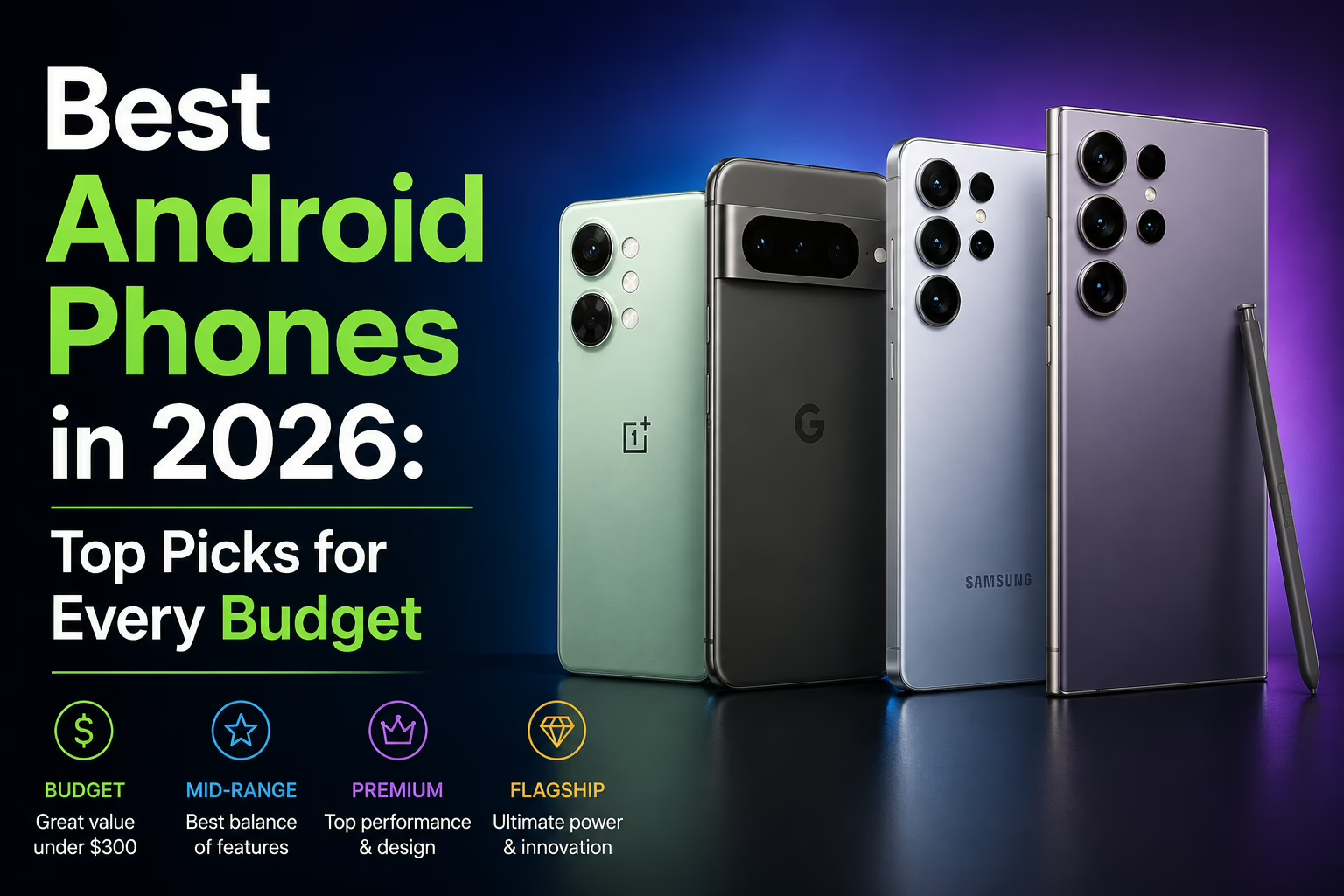
Choosing a new smartphone used to be a complicated task, but in 2026, the Android landscape is better than ever. We have reached a point where even mid-range devices offer smooth performance, beautiful displays, and cameras that capture stunning memories.
The biggest shift this year is the focus on longevity. Manufacturers are finally committing to longer software support windows, meaning your investment stays relevant for years. When buying a phone today, prioritize your daily needs over chasing headline-grabbing numbers.
Whether you need a powerhouse for gaming, a professional-grade camera, or a reliable budget device, this guide helps you find the perfect match. Let’s dive into our top picks for the best Android phones in 2026.
How to Choose the Right Phone
Buying a smartphone is about balancing your priorities. If you are a mobile gamer, look for devices with advanced cooling, check out our guide to best offline Android games to see how they perform. If you are a traveler, prioritize battery and weight; you might also find our lightweight laptops guide useful.
For connectivity, remember that a phone is only as good as its network – consider pairing your device with one of the best WiFi routers in 2026.
Finally, always investigate the manufacturer’s reputation for software updates. A phone that stops receiving security patches after two years is a liability, not a deal.
Editor’s Note
Our recommendations for 2026 are based on official manufacturer specifications, documented software support policies, and analysis of current industry market positioning. We evaluate these devices based on value for money, the quality of the software experience, and long-term ownership potential. We prioritize hardware reliability and manufacturer commitments to security updates, as these factors determine how long a device remains useful and secure in your daily life.
Quick Picks: Best Android Phones at a Glance
| Phone | Price Range | Software Support | Best Feature | Best For |
|---|---|---|---|---|
| Google Pixel 11 Pro | Premium | 7 Years | Computational Photography | Photography Enthusiasts |
| Samsung Galaxy S26 | Premium | 7 Years | Display Quality | Most Users |
| OnePlus 15 | Flagship | 5 Years | Charging Speed | Performance Users |
| Xiaomi 17 Pro | Flagship | 5 Years | Versatile Optics | Camera/Hardware Value |
| Nothing Phone (4) | Mid-Range | 4 Years | Software UI | Design-conscious Buyers |
| Motorola Edge Ultra | Mid-Range | 4 Years | Battery/Display | Value Seekers |
Detailed Reviews
Google Pixel 11 Pro
Overview: The Pixel 11 Pro represents Google’s refined approach to hardware, centered on the Tensor G6 chip and AI-enhanced image processing.
Why We Recommend It: It offers the most consistent camera performance in the Android ecosystem. The software experience is clean, devoid of bloatware, and receives the earliest updates.
What Buyers Should Know: While excellent for photography, its raw processing power lags slightly behind competitors, though it is more than sufficient for everyday tasks.
Long-Term Ownership Verdict: With a 7-year support promise, this is a strong investment for users who prioritize privacy, security, and consistent software updates.
Samsung Galaxy S26
Overview: The S26 remains the industry standard for a well-rounded flagship, balancing performance, screen quality, and wide availability.
Why We Recommend It: Samsung’s ecosystem integration is unmatched, and the display quality is among the best in the industry.
What Buyers Should Know: The UI can be feature-heavy. If you prefer a simpler, lighter interface, this may require some initial configuration time.
Long-Term Ownership Verdict: Exceptional resale value and a long update cycle make this the safest bet for most consumers.
OnePlus 15
Overview: The OnePlus 15 focuses on delivering top-tier performance and rapid charging at a price point below traditional “ultra” flagships.
Why We Recommend It: The fast-charging capability significantly changes how you manage your day, reducing “low battery” anxiety.
What Buyers Should Know: The camera performance is solid, though it lacks the computational “magic” found in Google or Samsung’s top-tier devices.
Xiaomi 17 Pro
Overview: A hardware-first approach that delivers exceptional value, particularly in camera hardware optics.
Why We Recommend It: It offers flagship-level hardware at a price that often undercuts the competition. (For deep dives on specific interface features, see our Xiaomi Mimo code review).
Nothing Phone (4)
Overview: Focuses on a unique design and a stripped-back, user-friendly software experience.
Why We Recommend It: It provides a refreshing break from the bloatware found on many other Android devices.
Motorola Edge Ultra
Overview: A highly capable mid-range phone that hits the “sweet spot” for most users.
Why We Recommend It: It provides essential flagship features like high-refresh-rate displays and solid battery life without the premium price tag.
Buying Factors
Software Support Matters More Than Ever
In 2026, a phone is a long-term companion. Security updates are mandatory for privacy, while OS updates ensure you have access to the latest interface features. Prioritize brands that commit to 5+ years of support, as this directly affects the device’s resale value and safety.
Camera Quality Beyond Megapixels
Image processing (how the phone interprets light, color, and dynamic range) is more important than the sensor megapixel count. Consistent results across different lighting conditions are the mark of a quality camera system.
Common Buyer Mistakes
- Chasing Benchmark Scores: Real-world performance rarely mirrors laboratory synthetic benchmarks.
- Ignoring Software Support: A powerful phone is obsolete the moment it stops receiving security updates.
- Overpaying for Flagship Features: Most users do not utilize the full capabilities of $1,200+ devices.
Frequently Asked Questions
- Which Android phone has the best camera? Google Pixel 11 Pro leads in computational consistency.
- Which Android phone has the best battery life? Devices like the Motorola Edge Ultra excel due to efficient hardware-software optimization.
- Which Android phone gets the longest software support? Both Google and Samsung lead the market with 7-year commitments.
- Should I buy Samsung or Google Pixel? Choose Samsung for ecosystem integration and hardware polish; choose Pixel for camera consistency and clean software.
- Which Android phone offers the best value? The Motorola Edge series typically provides the best balance of features per dollar.
- Which Android phone is best for gaming? The OnePlus 15 offers excellent cooling and processor performance for sustained gaming.
- Which Android phone is best under $500? Look at the latest mid-range offerings from Nothing or Motorola.
- Is Xiaomi reliable in 2026? Yes, their hardware quality is consistent, though their software UI is significantly different from “stock” Android.
- Do megapixels matter? Only to a point; software processing is significantly more important for final image quality.
- How long should an Android phone last? With current support policies, a modern Android flagship should remain viable for 5 to 7 years.
Final Recommendations
- Best for Most People: Samsung Galaxy S26 (Reliability and support).
- Best for Photography: Google Pixel 11 Pro (Unmatched processing).
- Best for Gaming: OnePlus 15 (Performance and charging speed).
- Best Value Flagship: Xiaomi 17 Pro (Hardware value).
- Best Budget Choice: Motorola Edge Ultra (Essential features).
- Best Compact Choice: Google Pixel 11 (Maintains full power in a smaller form factor).
About the Author
The author is a senior technology editor with over 15 years of experience covering the global smartphone market. Specializing in consumer electronics analysis, they provide evidence-based guidance to help users navigate the complex landscape of mobile technology, ensuring every recommendation is based on practical value, long-term usability, and real-world consumer needs.