In this article
Managing a bulk grain storage room—whether in a commercial mill, brewery, farm hub, or feed warehouse—demands constant vigilance. Grain is liquid gold to pests: calorie-dense, shelf-stable, and aromatic. For rodents, an unfortified room represents an endless food supply and an insulated nesting sanctuary.
While an individual mouse consumes only three to four grams of grain daily, its capacity for destruction is massive.
Mice urinate, shed hair, and deposit droppings, introducing severe stored grain contamination risks like Salmonella and Leptospira. Contamination ruins entire lots and triggers costly shutdowns.
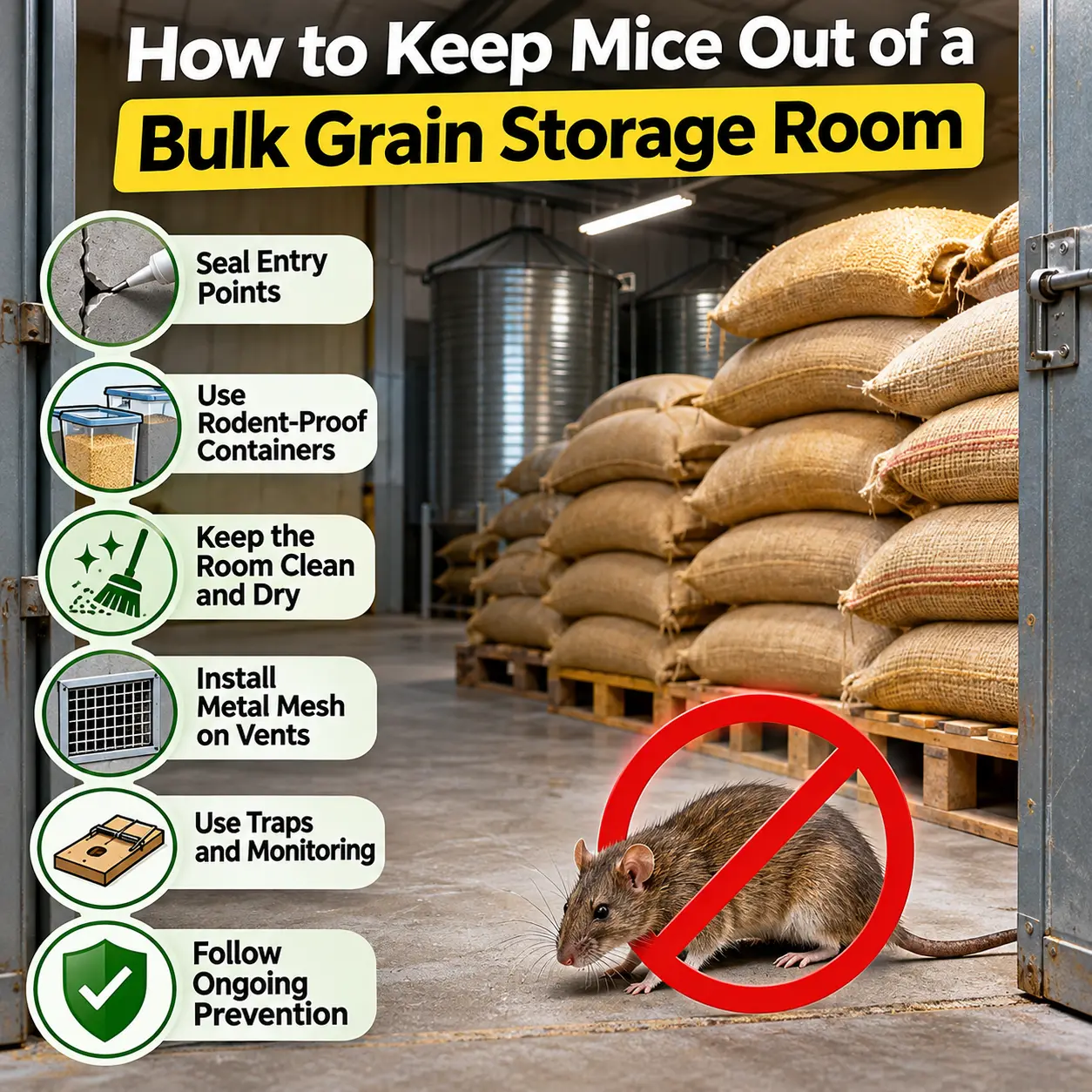
Trapping alone will not solve an infestation if your facility continues to offer accessible food and harborage. Achieving a mouse-free storage environment requires pairing structural exclusion with strict sanitation and storage geometry. Here is how to keep mice out of your bulk grain storage room permanently.
1. Structural Exclusion: Sealing Gaps Smaller Than a Dime
The quick answer: Mice compress their ribcages to squeeze through openings as narrow as one-quarter inch; sealing exterior penetrations with steel wool, wire mesh, and metal flashing stops them before they enter.
Effective rodent control stops mice at the threshold rather than catching them inside. A house mouse (Mus musculus) needs an opening no larger than a pencil to enter. Expanding foam and rubber weatherstripping fail because rodent incisors chew through soft materials easily.
Fortify your building envelope with physical barriers:
- Metal Door Sweeps: Fit aluminum-backed brush sweeps along door bottoms, keeping floor clearance under one-quarter inch.
- Pack Pipe Penetrations: Inspect where conduits, augers, or pipes penetrate walls. Pack gaps with stainless steel wool before sealing with polyurethane caulk or hydraulic cement.
- Screen Vents: Cover intake louvers, floor drains, and vents with 1/4-inch galvanized hardware cloth to maintain airflow while blocking rodents.
2. Elevating Inventory and the 18-Inch Perimeter Rule
The quick answer: Storing grain bags directly against floors or walls creates concealed runways and traps moisture; keeping stock on pallets 18 inches away from walls forces rodents into the open.
Stacking paper bags or bulk totes flush against concrete walls invites pests. Mice rely on their whiskers to navigate along walls. Stacking grain against walls creates dark corridors where rodents nest undisturbed.
Implement strict bulk grain pest exclusion floor spacing:
- The 18-Inch Border Rule: Paint a white line on the floor 18 inches from all walls, keeping pallets behind it. This open lane removes rodent cover and simplifies sweeping.
- Elevate on Non-Wood Pallets: Never store grain directly on bare concrete. Elevate bags at least six inches on plastic or metal pallets, which offer fewer nesting cavities than porous wood.
- Maintain Wide Aisleways: Keep 24 to 36 inches between pallet rows to allow full visual inspections during audits.
3. Upgrading Storage Vessels: Moving Beyond Paper Sacks
The quick answer: Paper sacks and woven polypropylene bags provide zero physical barrier against rodent teeth; decanting working stock into heavy-gauge galvanized steel bins prevents break-ins.
Bulk grain arrives in paper bags or poly totes, which offer zero defense against a mouse’s sharp teeth.
Upgrade your container strategy:
- Store Open Grain in Metal Bins: Once a bag is cut open, transfer remaining grain into galvanized steel cans or metal vaults with tight lids.
- Inspect Inbound Pallets: Check incoming deliveries before storage. Reject pallets showing chew marks or webbing to avoid importing pests.
- Use Sealed Hopper Bins: For loose grain, use smooth metal or poly-lined hoppers with gasket-sealed discharge gates and vents.
4. Establishing a Zero-Spill Daily Sanitation Protocol
The quick answer: A single tablespoon of spilled grain or grain dust can sustain a nesting female mouse for days; immediate daily sweeping removes the baseline food source that attracts pests.
Even strong structural defenses fail if the scent of spilled grain fills the air. A mouse’s acute sense of smell detects broken grain oils and starch dust from hundreds of feet away.
Disciplined grain room sanitation protocols eliminate primary attractants:
- Sweep After Every Transfer: Keep a shop vacuum and broom next to handling stations. Clean up broken kernels, chaff, and dust immediately after transfers.
- Avoid Wet Mopping: Water turns grain dust into a damp paste that settles into floor seams, feeding larvae and mice. Use dry vacuuming instead.
- Empty Trash Daily: Never allow empty grain bags or twine to sit in open bins overnight. Empty trash daily into an exterior dumpster.
5. Controlling Moisture, Relative Humidity, and Airflow
The quick answer: High humidity accelerates grain respiration, intensifying aromas and creating condensation that gives rodents both soft food and essential drinking water.
Mice obtain much of their hydration from food. In humid rooms, grain absorbs ambient moisture, softening hulls and making kernels easier to chew and digest.
Manage atmospheric conditions:
- Maintain Humidity Below 50%: Run commercial dehumidifiers during warm months. Keeping grain dry preserves seed quality, deters mold, and reduces volatile scents that attract pests.
- Ensure Air Circulation: Install fans or positive-pressure ventilation to prevent dead air spots and condensation along trusses and corners.
6. Safe Trapping and Professional Perimeter Defense
The quick answer: Avoid open poison baits near bulk food products; deploy mechanical multi-catch traps indoors and establish secure, tamper-resistant bait stations along the outdoor perimeter.
Scattering loose poison baits inside a grain room is a contamination hazard. Poisoned mice die deep inside pallet stacks, causing foul odors and contaminating food products. Loose poison also risks mixing into grain lots.
Implement food-safe pest management:
- Indoor Mechanical Traps: Place multi-catch traps along the 18-inch perimeter lane. Position traps flush against walls with trigger openings facing baseboards.
- Fortify Exterior Perimeters: Rodents travel along foundations before finding an entry. Facilities and mills operating in arid climates—where field mice migrate indoors as fall temperatures drop—often partner with specialists in rodent control in Denver to install tamper-resistant exterior bait stations. Exterior baiting intercepts foraging mice before they test building seals.
7. Routine Weekly Inspection Checklist for Bulk Grain Rooms
Before closing your facility each week, run through this rapid audit:
- [ ] Are all perimeter walls clear of bags and clutter by at least 18 inches?
- [ ] Are all opened bags decanted into sealed, galvanized metal containers?
- [ ] Are floor drains and intake vents tightly covered with 1/4-inch hardware cloth?
- [ ] Is the floor swept clean of spilled wheat, barley, corn, and dust?
- [ ] Are exterior door sweeps sealing tight against thresholds with zero visible gaps?
- [ ] Have interior multi-catch traps been inspected, emptied, and reset?
Protecting a bulk grain storage room from mice is an ongoing operational commitment. By replacing paper sacks with galvanized steel, keeping pallets away from walls, maintaining zero-spill cleanliness, and sealing structural gaps, you eliminate the food and shelter rodents require. A well-sealed, orderly grain room safeguards product quality, protects your investment, and keeps grain clean and pest-free.
8. Building a Long-Term Grain Storage Monitoring System
The quick answer: A successful rodent prevention programme needs documented inspections, clear responsibility, and consistent monitoring. Relying on someone noticing a mouse during routine work is not a dependable control strategy.
Even when a grain room appears clean, small changes can indicate that rodents are becoming active again. Fresh droppings, damaged packaging, disturbed dust, and unusual odours are early warning signs that deserve attention.
A structured monitoring system makes these changes easier to identify before they develop into a larger infestation.
Introduce a written monitoring schedule that covers:
- Daily housekeeping inspections around grain transfer points, loading doors, and waste collection areas.
- Weekly examination of traps, wall openings, door sweeps, and ventilation screens.
- Monthly inspection of structural seals, exterior foundations, and drainage points.
- Quarterly reviews of pest activity records, contractor reports, and recurring problem areas.
Following the same inspection route makes it easier to identify changes and verify corrective work.
9. Measuring Rodent Activity Instead of Guessing
The quick answer: Monitoring trap activity, fresh droppings, damaged packaging, and recurring entry points gives facility managers a clearer picture of whether prevention measures are working.
A room with no visible mice is not necessarily a rodent-free room. Mice are nocturnal and can remain hidden behind equipment or inside wall cavities for extended periods.
Instead of relying on occasional visual checks, maintain a simple pest activity register.
Illustrative observations only. These numbers are not actual population estimates or industry benchmarks.
| Monitoring indicator | What to record | Recommended response |
|---|---|---|
| Trap activity | Captures and trap condition | Inspect nearby entry points |
| Fresh droppings | Location and frequency | Investigate nearby shelter |
| Packaging damage | Type of container affected | Isolate affected stock |
| Structural gaps | Location and approximate size | Repair with suitable materials |
| Moisture problems | Condensation and damp areas | Check ventilation and drainage |
10. Protecting Incoming Grain Deliveries From Rodent Contamination
The quick answer: Inspect every incoming delivery before it enters the main storage area. Rodents can arrive inside damaged packaging, on contaminated pallets, or through transport vehicles that have not been properly maintained.
A well-maintained storage room can still develop an infestation if contaminated materials enter through the receiving area.
- Examine the underside of pallets for droppings, nesting materials, and chew marks.
- Inspect bags for punctures, damaged stitching, and unexplained powder accumulation.
- Check transport vehicle floors and corners before unloading.
- Keep rejected or damaged deliveries separate from accepted inventory.
- Clean unloading equipment after handling suspect materials.
- Record supplier, delivery date, batch number, and any damage identified.
The Importance of Traceable Inventory Records
When several grain deliveries arrive each day, handwritten observations can become difficult to organise. A simple digital register helps connect inspection findings with specific batches and storage locations.
The same principle of organised project documentation is useful in other operational environments, including keeping flooring estimates organised when managing multiple projects.
For larger businesses, operational responsibilities can also be structured around the four dimensions of service management in ITIL 5, particularly when people, processes, information, and technology must work together.
11. Using Automation and Digital Monitoring to Improve Pest Prevention
The quick answer: Digital inspection logs, scheduled reminders, temperature and humidity sensors, and documented maintenance alerts can help warehouse managers identify problems without depending entirely on manual supervision.
Technology does not replace physical inspections. It makes the information collected during those inspections easier to manage.
An organisation exploring enterprise AI for modern businesses may also consider how automation can help organise inspection records, identify recurring maintenance issues, and prepare reports.
However, automated systems should never make pest-control decisions without human verification. A humidity sensor cannot confirm a rodent infestation, and a software alert cannot establish whether contaminated grain is safe to use.
Environmental Sensors
Monitor humidity, temperature, and condensation risks in different storage zones.
Inspection Logs
Keep records of completed inspections, maintenance work, and trap observations.
Maintenance Alerts
Notify responsible staff when structural repairs or inspections are overdue.
Inventory Tracking
Connect damaged packaging reports with supplier and batch information.
Businesses should also understand what an internet provider’s IP address says about you online and how privacy rules change what marketing data analytics services can measure when designing broader data collection policies.
Access to digital inspection records should be restricted to authorised staff. Strong authentication practices, including how passkeys work without passwords, can also form part of a wider security approach.
For facilities using connected applications, understanding Supabase hosting on a VPS and its resource requirements can help with infrastructure planning. Developments in AI coding agents and the future of programming also demonstrate how software automation is changing business workflows.
12. Staff Training and Accountability in Grain Storage Facilities
The quick answer: Every employee who handles grain should understand how to recognise rodent evidence, report damaged packaging, and maintain basic sanitation standards.
A prevention programme can fail when responsibility is unclear. One employee may assume that another has cleaned a spill, while a maintenance worker may overlook a small opening because nobody has reported it.
| Responsible person | Primary responsibility | Frequency |
|---|---|---|
| Warehouse operator | Spill removal and packaging checks | Daily |
| Shift supervisor | Storage spacing and housekeeping | Daily |
| Maintenance technician | Door seals, vents, drains, and gaps | Weekly |
| Facility manager | Inspection records and corrective actions | Weekly |
| Pest-control professional | Monitoring programme and treatment review | As scheduled |
Training should include practical demonstrations rather than relying exclusively on written instructions.
Employees should know how to identify fresh rodent droppings, recognise chew marks, report unusual smells, and isolate damaged grain packaging.
The same approach to assigning responsibilities is useful when managing larger projects. Businesses can benefit from the skills needed to succeed in AI project management, particularly when coordinating several teams and maintaining clear accountability.
Management should also remember that operational reputation depends on consistent standards. A contamination incident can affect supplier relationships, customer confidence, and business continuity. This is one reason a CEO’s personal reputation can become a business risk when organisational problems are not managed properly.
13. Preparing for Seasonal Rodent Activity and External Risks
The quick answer: Increase perimeter inspections when weather conditions, harvesting activity, and nearby land disturbance increase the likelihood of rodents searching for indoor shelter and food.
Rodent activity is not constant throughout the year. Changes in temperature, rainfall, harvesting schedules, and surrounding construction can influence where mice search for food and nesting locations.
| Period or condition | Potential risk | Preventive action |
|---|---|---|
| Harvest season | Increased grain movement and spills | Inspect receiving areas and vehicles |
| Heavy rainfall | Water accumulation and drainage problems | Check drains and moisture entry points |
| Cooler weather | Rodents seeking indoor shelter | Inspect doors and perimeter traps |
| Nearby construction | Disturbance of existing rodent habitats | Increase exterior monitoring |
| Extended storage | Undetected packaging damage | Inspect older inventory regularly |
External visibility and the physical layout of a facility also matter. Storage buildings with poorly maintained surroundings can create sheltered routes for rodents.
Even the design principles used in successful exhibition stands in Hannover demonstrate the importance of planning circulation, visibility, and accessible working areas. In a grain warehouse, these same general design considerations help employees inspect storage zones without unnecessary obstructions.
14. Calculating the Operational Cost of Poor Rodent Prevention
The quick answer: The financial impact of rodents extends beyond the grain they consume. Contaminated stock, disposal costs, cleaning labour, interrupted operations, and professional treatment can make an infestation considerably more expensive.
A small infestation can create a large operational problem if it remains undetected.
- Replacement value of damaged grain.
- Labour required for additional cleaning and inspection.
- Disposal and transport expenses for affected material.
- Pest-control professional fees.
- Equipment repair and structural sealing costs.
- Production delays and interrupted deliveries.
The following percentages are illustrative budget allocations for a hypothetical facility, not standard market prices.
The remaining 4% represents a contingency reserve.
For businesses operating in India, financial planning should also account for appropriate business documentation and compliance requirements. Understanding GST registration and business loans for Indian entrepreneurs can help facility operators manage the wider financial side of running a commercial operation.
15. When to Bring in a Professional Pest-Control Specialist
The quick answer: Professional assistance is advisable when rodent evidence continues appearing despite exclusion and sanitation measures, when contamination affects stored products, or when nesting locations cannot be safely accessed by warehouse staff.
Some infestations are more complicated than a few mice entering through a door gap.
Rodents may occupy wall cavities, inaccessible roof spaces, machinery enclosures, and neighbouring storage areas. Attempting to resolve these problems with randomly placed traps can leave the original source untouched.
A qualified pest-control professional can help with:
- Identifying likely entry routes and nesting locations.
- Assessing the level and distribution of rodent activity.
- Designing a monitoring and trapping programme.
- Selecting suitable control methods for food storage environments.
- Establishing exterior perimeter protection.
- Reviewing records and recommending corrective action.
If grain has been exposed to rodent urine, droppings, or nesting material, isolate the affected stock and obtain an appropriate food-safety assessment. Simply removing visible contamination does not establish that the remaining product is safe.
The goal is not just to remove the mice currently present. It is to identify why they entered, eliminate the conditions that support them, and prevent the same problem from returning.
Use the key points in this guide to understand the topic and make more informed decisions.

This guide is researched and edited using relevant documentation, reliable sources and publicly available information.
Was this guide helpful?
Your feedback helps us improve future guides.