In this article
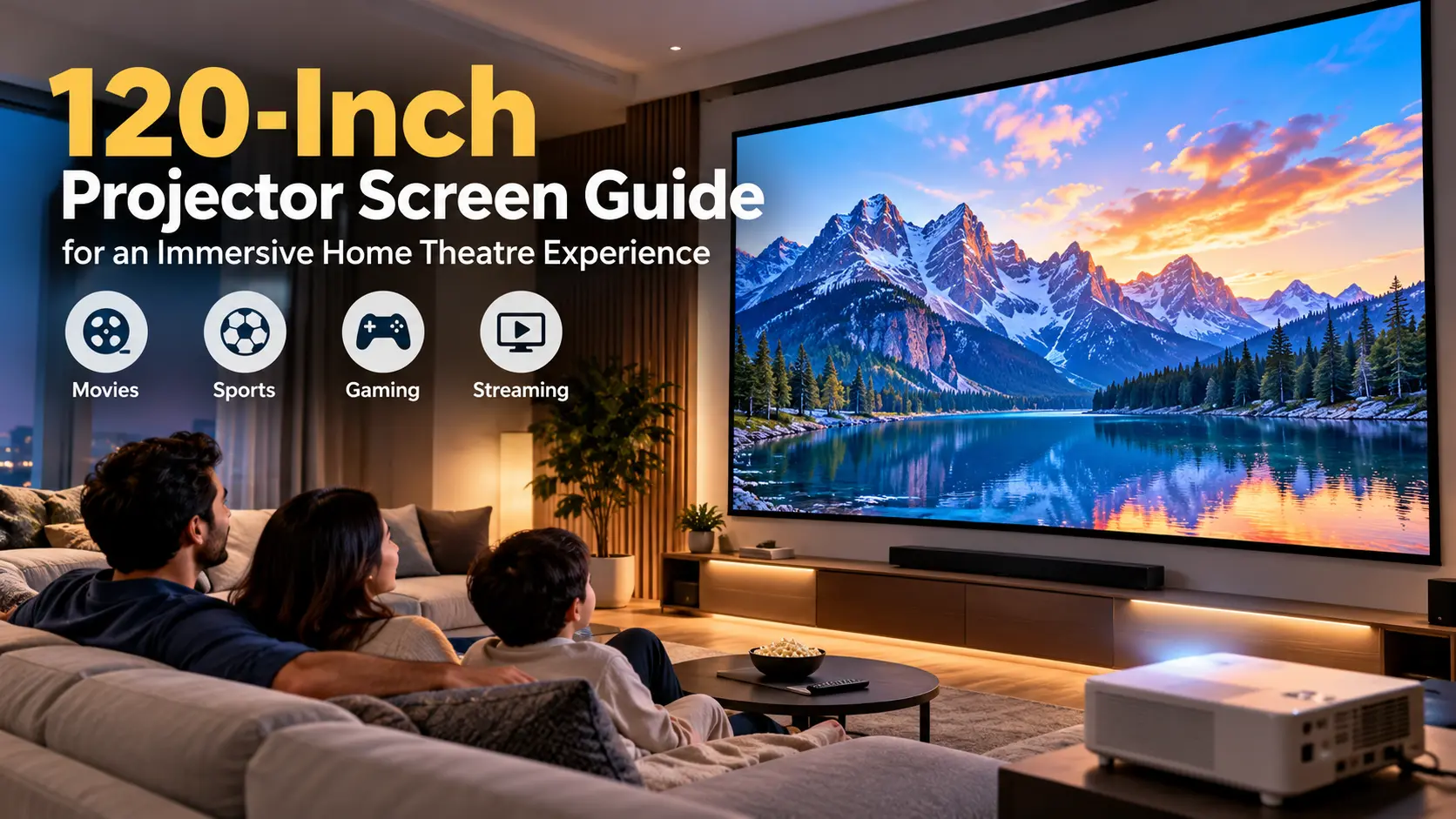
A good home theatre should feel comfortable, immersive, and easy to enjoy. The screen plays a major role in creating that experience. A 120 inch projector screen offers a large viewing area that can make movies, sports, games, and streaming content feel much more engaging. It can also be a good option for people who want a bigger display than a standard large screen TV.
What Is a 120 Inch Projector Screen?
A 120 inch projector screen is measured diagonally from one corner to the other. In most home theatre setups, this screen size is used in a 16:9 format. This makes it suitable for movies, TV shows, streaming platforms, and gaming.
The larger screen helps create a wider field of view, which can make the overall experience feel more cinematic. At the same time, it is important to plan the room properly so that the screen does not feel too large for the available space.
Why Choose a 120 Inch Projector Screen for Home Theatre?
A More Immersive Viewing Experience
One of the biggest reasons to choose a 120 inch projector screen is the sense of scale it creates. A larger image can make films, live sports, and games feel more involving, especially when viewed from the right distance.
When paired with a suitable projector, the setup can bring a cinema-like feel into the home without needing an extremely large television.
Suitable for Movies, Sports and Gaming
A large home theatre projector screen works well for different kinds of entertainment. Movies feel more dramatic, sports are easier to follow on a bigger display, and games can feel more immersive.
A well-planned projector TV setup can also make details easier to notice, especially in action scenes, open-world games, or live events.
A Practical Alternative to a Large Screen TV
A 120 inch projector screen can be worth considering if you want a very large image. A large screen TV may be easier to use in a bright room, but a projector setup often gives you more screen size when the space and lighting are suitable.
The better option depends on how the room is used and what kind of viewing experience you prefer.
Key Factors to Consider Before Choosing a 120 Inch Projector Screen
Room Size and Viewing Distance
Before installing a 120 inch projector screen, check whether the room has enough space for comfortable viewing. If you sit too close, the image may feel overwhelming. If you sit too far away, you may lose some of the immersive effect.
The right 120 inch projector screen viewing distance helps you enjoy the full image without unnecessary strain.
Screen Aspect Ratio
Home entertainment often has a 120 inch 16:9 projector screen. Works great with most modern movies, streaming content, TV programs and gaming consoles.
Choosing the appropriate aspect ratio will also help reduce black bars and make better use of the available screen area.
Screen Material and Gain
The material of the screen can affect the brightness and clarity of the image. The right 120 inch projection screen should be in accordance with the brightness of the projector and the lighting conditions of the room.
Some screen materials perform better in darker rooms, some are designed for more ambient light.
Ambient Light in the Room
Room lighting can make a noticeable difference to picture quality. A 120 inch projector screen for home theatre usually performs better when unwanted light is reduced.
Curtains, blinds, or dimmable lights can help improve contrast and make the picture easier to see.
Projector Compatibility
The projector must be able to create a clear image at 120 inches. Before you set up the screen, check projector brightness, resolution, throw distance and placement needs.
These details can have a major impact on image sharpness and overall viewing quality.
120 Inch Projector Screen vs Large Screen TV
The 120” projector screen gives you some extra viewing area to help create a more powerful cinema style experience. But a bigger TV could be easier to set-up and work better in a bright room.
If you want a bigger size screen and something more immersive then a projector TV might be your best bet but if you want something more practical for everyday use in brighter rooms then a TV might be better.
How to Set Up a 120 Inch Projector Screen for the Best Experience
Place the 120 inch projector screen at an appropriate height and align the projector accordingly. Once everything is in place, fiddle with the focus, brightness, contrast and picture settings until the picture appears clear and balanced.
It’s also a good idea to control the room lighting and have a suitable sound system. These small changes can make the overall home theatre viewing experience much better.
Who Should Consider a 120 Inch Projector Screen?
A 120 inch projector screen is a good choice for the movie lover, sports fan, gamer or family who wants a bigger entertainment setup at home.
It can also be good for users who want more screen space than a typical large screen TV can offer and have room to work comfortably in a projector setup.
Additional Tips for Creating a Better Home Entertainment Setup
Getting the Room Ready for a Large Screen
A good home theatre is not only about choosing a large screen. The room layout, seating arrangement, lighting and equipment placement all play an important role in how comfortable the experience feels. Before installing a 120 inch projector screen, consider how the space will be used and whether the setup will work for everyday entertainment.
Cable management is another small detail worth planning in advance. Projectors, streaming devices, speakers and other equipment can quickly make a room feel cluttered if cables are left exposed. A simple layout with suitable storage can make the entertainment area look cleaner and easier to maintain.
Choosing the Right Technology for Your Setup
Modern home entertainment systems often combine several connected devices and software platforms. Streaming services, smart home equipment, wireless networks and connected displays can all become part of the same setup. Understanding how these technologies work together can help you make more informed decisions before investing in new equipment.
For readers interested in the wider technology behind connected systems, a practical introduction to Keycloak Docker Setup Guide for Beginners offers useful context on authentication and managing access to applications. Similarly, How Passkeys Work Without Passwords explains another approach to securing online accounts and services.
Internet connectivity also deserves attention, particularly when most of your entertainment comes from streaming platforms. Understanding What Your Internet Provider’s IP Address Says About You Online can help you learn more about network identification and online privacy. These topics are not directly related to screen quality, but they are useful when building a more connected home environment.
How AI Is Changing Home Entertainment and Digital Content
Artificial intelligence is increasingly involved in how people discover, create and consume digital content. From personalised recommendations to AI-assisted video production, these tools are changing the way entertainment is produced and delivered.
For example, What Is Enterprise AI? A Practical Guide for Modern Businesses explores how organisations use AI across different business operations. Readers interested in newer AI applications can also explore What Is Jev AI? How It Works, Features, Uses, Benefits and Limitations to understand another part of the developing AI landscape.
Video creation is also becoming more accessible. The Higgsfield AI Review 2026: Features, Pricing, Video Tools & What It Can Actually Do looks at AI-powered video tools and their practical uses. While these platforms do not replace the need for a suitable projector or screen, they show how the content displayed on home theatre systems continues to evolve.
Planning a Smarter Technology Purchase
Before spending money on a home entertainment upgrade, it helps to separate essential requirements from optional features. A brighter projector may be useful in a room with some ambient light, while a screen designed for controlled lighting may be a better choice for a dedicated cinema room. The right decision depends on your budget, viewing habits and available space.
This type of planning is useful for technology purchases more generally. The same practical approach appears in 10 Skills You Need to Succeed in AI Project Management, which explores planning, coordination and decision-making in technology projects. For organisations managing multiple digital services, What Are the Four Dimensions of Service Management in ITIL 5? provides further context on the different factors involved in delivering and managing services.
Businesses also need to consider how technology investments support their wider objectives. What PPC Management Looks Like Now That Google Ads Runs More on AI discusses changes in AI-driven advertising, while Best AI Visibility Service Providers for Brands Competing in AI Search explores how brands are approaching visibility in AI-powered search experiences.
For businesses that depend on online discovery, A Practical SEO Plan for Beauty Writers and Independent Brands offers a useful example of how a structured digital strategy can support visibility. Reputation also matters when customers compare products and services, as explained in When a CEO’s Personal Reputation Becomes a Business Risk.
Looking Beyond the Equipment
The overall experience is shaped by more than the projector and screen alone. Comfort, organisation, ease of use and the way a room fits its intended purpose all influence whether a setup works well over time. The same principle applies to physical spaces designed for visitors and customers. For an example of how layout and presentation affect the experience of a space, see What Makes an Exhibition Stand Successful in Hannover? Key Design Insights from Stand Builders GmbH.
Ultimately, a well-planned home theatre should suit the people using it. Taking time to consider room dimensions, equipment placement, lighting and everyday viewing habits can help you avoid unnecessary purchases and create a setup that remains enjoyable long after installation.
Conclusion
A 120 inch projector screen, well designed, can help you create a much more immersive home theater experience. Room size, viewing distance, projector compatibility, screen material and lighting are all important factors to consider.
Combine all of these factors and a big projector screen can be a great place to watch movies, sports, games and everyday entertainment.
Use the key points in this guide to understand the topic and make more informed decisions.

This guide is researched and edited using relevant documentation, reliable sources and publicly available information.
Was this guide helpful?
Your feedback helps us improve future guides.