In this article
Why Digital Trust Matters More Than Ever
In today’s AI-driven marketplace, credibility and trust influence nearly every purchasing decision. Consumers have access to unlimited information before making a purchase, including reviews, social media discussions, comparison websites, and AI-powered search experiences. This allows buyers to evaluate companies within minutes, making transparency, reliability, and authentic customer experiences more important than ever.
Trust acts as the foundation of every successful Customer relationship. When consumers believe a brand is honest and dependable, they are far more likely to make purchases, recommend the business to others, and remain loyal over time. As businesses increasingly adopt artificial intelligence to improve customer experiences, maintaining transparency and ethical AI practices has become equally important for preserving that trust. Conversely, a lack of credibility can quickly drive potential customers toward competitors, regardless of how advanced a product or service may be.
This means trust is no longer built solely through advertising. Instead, businesses earn credibility by delivering transparent experiences, protecting customer information, and consistently meeting expectations.
Artificial intelligence has accelerated this transformation. Companies now rely on intelligent systems to personalize recommendations, detect fraud, improve customer service, and automate business operations. However, as AI becomes more integrated into everyday interactions, customers also expect greater accountability and transparency.
Understanding What is Artificial Intelligence can help businesses appreciate how modern AI systems influence customer behavior, decision-making, and digital experiences.
Organizations that successfully combine technological innovation with ethical business practices are more likely to earn long-term customer loyalty.
What Is Digital Trust?

Digital trust refers to the confidence customers have that a business will protect their data, communicate honestly, and use technology responsibly.
Unlike traditional trust, digital trust extends across every online interaction, including:
- Company websites
- Mobile applications
- AI chatbots
- Payment systems
- Customer support
- Email communication
- Social media
- Cloud services
Every interaction either strengthens or weakens a company’s reputation.
Businesses that demonstrate transparency, reliability, and security create stronger emotional connections with customers while reducing hesitation during purchasing decisions.
How Artificial Intelligence Is Changing Customer Expectations
Artificial intelligence has transformed customer expectations across nearly every industry.
Consumers now expect:
- Instant responses
- Personalized recommendations
- 24/7 support
- Accurate search results
- Secure online transactions
- Faster deliveries
- Predictive assistance
Many of these improvements are powered by Machine Learning, which enables systems to recognize patterns, improve over time, and make increasingly accurate predictions without requiring constant manual programming.
Understanding the various Types of Artificial Intelligence also helps explain why different AI systems perform specialized tasks ranging from customer service automation to cybersecurity monitoring.
Rather than replacing human interaction entirely, AI enhances efficiency while allowing employees to focus on more complex customer needs.
Building Trust Through AI Transparency
Transparency remains one of the strongest indicators of a trustworthy business.
Customers increasingly want answers to questions like:
- How is my data collected?
- Why am I seeing these recommendations?
- Is AI making this decision?
- Can I contact a real person?
- How secure is my information?
Businesses that openly explain how artificial intelligence is used create stronger customer confidence.
For example, AI-generated recommendations should clearly communicate why products or services are being suggested.
Likewise, organizations using generative AI tools such as ChatGPT or enterprise assistants should disclose when automated systems are assisting users instead of pretending every interaction is entirely human.
Responsible AI implementation also includes regular audits, bias testing, and continuous improvement.
As AI evolves beyond today’s systems toward concepts like Artificial General Intelligence (AGI) and Superintelligence, transparency will become even more important in maintaining public confidence.
AI-Powered Customer Support Creates Better Experiences
Customer support has become one of the most visible applications of artificial intelligence.
Modern AI assistants can:
- Answer common questions
- Track orders
- Schedule appointments
- Process returns
- Resolve simple issues
- Route complex cases to human agents
Unlike traditional support systems, AI can provide assistance around the clock without increasing staffing costs.
Businesses implementing AI-powered customer support often improve response times while maintaining consistent service quality across multiple communication channels.
Virtual assistants such as Siri AI have also helped familiarize consumers with conversational interfaces, making AI interactions feel increasingly natural and intuitive.
However, successful organizations understand that AI should complement—not replace—human expertise.
Customers facing complex issues still value empathy, critical thinking, and personalized assistance that only trained professionals can provide.
The most trusted businesses therefore combine intelligent automation with accessible human support.
Machine Learning Strengthens Security and Fraud Detection
One of AI’s greatest contributions to digital trust is improving cybersecurity.
Traditional security systems often rely on predefined rules, making them slower to detect new threats.
Machine learning models continuously analyze millions of transactions, identifying suspicious behavior in real time.
Examples include:
- Credit card fraud detection
- Account takeover prevention
- Identity verification
- Suspicious login monitoring
- Phishing detection
- Payment risk analysis
Because these systems continuously learn from new data, they become increasingly effective at preventing cyberattacks.
Businesses investing in AI-driven cybersecurity demonstrate a strong commitment to protecting customer information, which directly contributes to higher levels of trust and brand credibility.
Personalization Without Sacrificing Privacy
Customers appreciate personalized experiences—but only when privacy is respected.
Artificial intelligence enables businesses to recommend products, customize marketing campaigns, and anticipate customer needs based on behavioral insights.
However, excessive personalization without clear consent can quickly erode trust.
Responsible businesses therefore:
- Explain data collection practices.
- Offer clear privacy controls.
- Allow users to manage preferences.
- Minimize unnecessary data collection.
- Follow applicable privacy regulations.
When personalization is balanced with transparency, customers are far more likely to view AI as a helpful assistant rather than an intrusive technology.
Human Oversight Remains Essential
Despite rapid advances in artificial intelligence, trust ultimately depends on people.
Human oversight ensures that AI systems remain fair, accurate, and aligned with organizational values.
Strong leadership plays a critical role in establishing responsible AI governance, ethical decision-making, and accountability across business operations. Organizations investing in AI Leadership are better positioned to build sustainable trust while adapting to future technological changes.
Technology should enhance human judgment—not replace it.
Companies that maintain this balance are more likely to earn long-term credibility in an increasingly automated world.
AI Reputation Management and Digital Brand Credibility
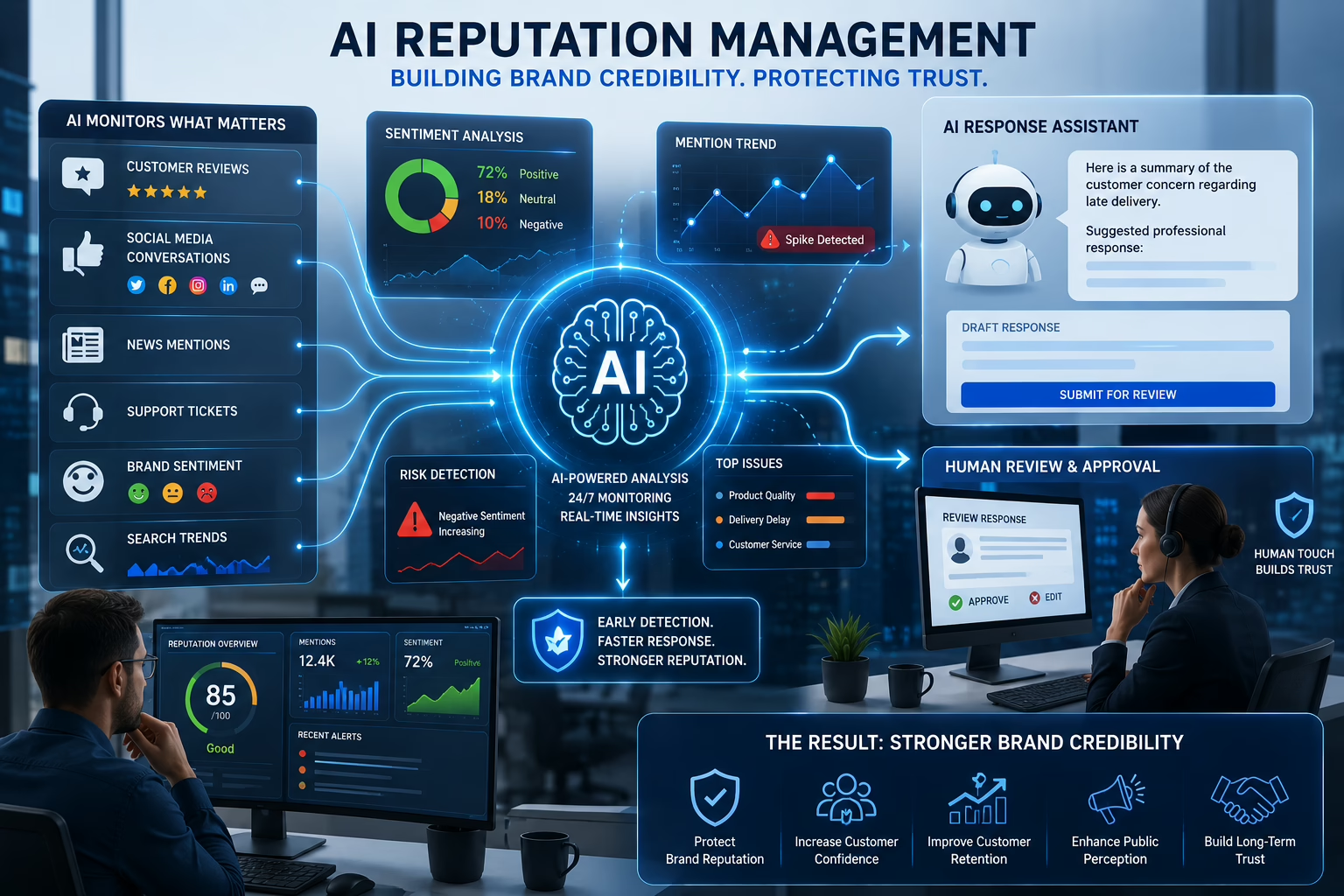
In today’s connected world, a company’s reputation can change within minutes. A single negative review, misleading social media post, or cybersecurity incident can influence public perception and customer confidence.
Artificial intelligence helps businesses monitor, analyze, and respond to these situations much faster than traditional methods.
Modern AI-powered reputation management platforms continuously analyze:
- Customer reviews
- Social media conversations
- News mentions
- Support tickets
- Brand sentiment
- Search trends
Instead of waiting for problems to escalate, AI identifies emerging issues early, allowing organizations to respond before they become major reputation risks.
Large Language Models such as Claude AI are increasingly being integrated into enterprise workflows to summarize customer feedback, generate professional responses, and assist support teams in maintaining consistent communication. Businesses exploring enterprise AI adoption can better understand these capabilities in our complete Claude AI guide.
However, businesses should avoid relying entirely on automated responses. Human review remains essential when addressing sensitive customer concerns, complaints, or public relations issues.
Combining AI efficiency with authentic human communication creates stronger long-term trust.
The Importance of Social Proof in an AI-Driven Marketplace
Even in an AI-driven world, potential customers often look to others before making important purchasing decisions. Reviews, testimonials, case studies, verified ratings, and user-generated content continue to serve as powerful forms of social proof, helping people evaluate whether a business is trustworthy and reliable.
Artificial intelligence now helps organizations analyze customer sentiment, identify recurring feedback, and showcase authentic success stories without manipulating public perception. Positive feedback from existing customers demonstrates that a business consistently delivers on its promises, encouraging new prospects to engage with greater confidence.
Consumers naturally trust the experiences of other customers more than traditional advertising.
Before purchasing products or services, people often look for:
- Verified customer reviews
- Case studies
- Testimonials
- Industry awards
- Expert recommendations
- Media mentions
Artificial intelligence helps businesses organize, analyze, and highlight genuine customer experiences without manipulating feedback.
Rather than generating fake reviews—which damages credibility—AI should be used to identify satisfied customers, encourage authentic testimonials, and better understand customer sentiment.
Earning recognition from respected industry publications also strengthens authority. Strategic digital PR initiatives, such as working with Click Intelligence, can help businesses increase visibility and secure valuable third-party mentions that contribute to long-term credibility.
When combined with honest customer experiences, these mentions reinforce a company’s reputation across both search engines and potential customers.
AI Improves Customer Experience Beyond Support
Customer trust extends far beyond answering questions.
Artificial intelligence now helps optimize nearly every stage of the customer journey.
Examples include:
- Product recommendations
- Inventory management
- Delivery predictions
- Personalized shopping
- Smart notifications
- Predictive maintenance
- Intelligent search
- Automated scheduling
For e-commerce businesses, AI has become particularly valuable in logistics optimization.
Predictive analytics can estimate shipping delays, recommend better delivery routes, optimize warehouse operations, and improve inventory forecasting.
Our guide on AI Logistics for E-commerce explains how intelligent automation is improving fulfillment while creating more reliable customer experiences.
Even creative industries increasingly rely on AI-assisted workflows. However, technology alone cannot eliminate operational complexity. As discussed in Why Creative Work Often Comes With Hidden Logistics, successful organizations combine automation with careful planning to consistently deliver exceptional customer experiences.
Responsible AI Governance Builds Long-Term Trust
Artificial intelligence is only as trustworthy as the policies governing its use.
Businesses should establish clear AI governance frameworks that address:
- Data privacy
- Algorithm transparency
- Human oversight
- Security standards
- Ethical decision-making
- Compliance requirements
- Bias testing
- Model monitoring
Responsible governance ensures AI systems continue producing fair and reliable outcomes while protecting customer interests.
Organizations embracing responsible AI leadership are more likely to gain regulatory confidence, investor trust, and long-term customer loyalty.
Common Mistakes Businesses Should Avoid
While AI offers significant opportunities, poor implementation can damage credibility.
Common mistakes include:
Hiding AI Usage
Customers appreciate honesty. Clearly disclose when chatbots or AI assistants are involved.
Collecting Excessive Data
Only gather information necessary to improve services.
Ignoring Human Oversight
Critical decisions should never rely exclusively on algorithms.
Using Low-Quality AI Content
Publishing inaccurate or misleading AI-generated content reduces authority and weakens EEAT.
Neglecting Cybersecurity
Strong AI systems must be supported by secure infrastructure and regular monitoring.
Prioritizing Automation Over Relationships
Technology should improve customer experiences—not replace meaningful human interaction.
Businesses avoiding these mistakes build stronger, more sustainable customer relationships.
AI Across Different Industries
Artificial intelligence is creating trust in many sectors beyond traditional technology companies.
Examples include:
Healthcare
AI assists medical professionals with diagnostics while improving patient communication.
Finance
Banks use AI to detect fraud and monitor suspicious transactions.
Retail
Retailers personalize shopping experiences while improving inventory management.
Beauty Technology
The beauty industry increasingly relies on intelligent skin analysis, personalized product recommendations, and virtual consultations.
Our article on AI-Powered Beauty Technology explores how responsible AI enhances customer confidence through personalization and data-driven recommendations.
Software Development
Developers also benefit from AI-assisted programming.
Projects like Xiaomi MiMo demonstrate how specialized coding models improve software development efficiency while requiring continuous human review to ensure quality and security.
The Future of Digital Trust and Artificial Intelligence
Artificial intelligence will continue evolving rapidly over the next decade.
Businesses should prepare for:
- More intelligent virtual assistants
- Autonomous business operations
- Predictive customer experiences
- Advanced cybersecurity systems
- Personalized AI agents
- Responsible AI regulations
- Explainable AI
- Greater human-AI collaboration
Future customer trust will depend not only on technological innovation but also on transparency, accountability, and ethical leadership.
Organizations that prioritize responsible AI adoption today will be better positioned to compete tomorrow.
Conclusion
Artificial intelligence has transformed how businesses build credibility, communicate with customers, and deliver digital experiences.
However, technology alone does not create trust.
Long-term credibility is built through transparency, ethical leadership, cybersecurity, valuable content, and exceptional customer experiences.
Businesses that combine intelligent automation with responsible governance will strengthen customer relationships while remaining competitive in an increasingly AI-driven economy.
Trust is ultimately earned through consistent actions—and artificial intelligence should serve as a tool to reinforce those actions rather than replace them.
Expert Insights
Digital trust is becoming one of the strongest competitive advantages for modern organizations.
Companies that invest in ethical AI, transparent communication, and secure digital experiences are more likely to improve customer loyalty, strengthen search visibility, and establish long-term authority within their industries.
Artificial intelligence should always enhance human expertise—not replace it.
Frequently Asked Questions
How does AI help build customer trust?
AI improves response times, personalizes experiences, strengthens cybersecurity, detects fraud, and provides consistent customer support when implemented responsibly.
What is digital trust?
Digital trust is the confidence customers have that organizations will protect their information, communicate honestly, and use technology responsibly.
Can AI replace human customer service?
No. AI handles repetitive tasks efficiently, but human expertise remains essential for empathy, complex problem-solving, and relationship building.
Why is transparency important when using AI?
Transparency helps customers understand how AI systems make decisions, increasing confidence and reducing uncertainty.
Is machine learning important for cybersecurity?
Yes. Machine learning continuously identifies unusual behavior, helping businesses detect fraud and respond to cyber threats more quickly.
How can businesses improve AI governance?
Organizations should establish clear policies covering privacy, security, ethics, bias testing, compliance, and human oversight.
Does AI improve customer experience?
Yes. AI enhances personalization, support, logistics, recommendations, and operational efficiency while reducing response times.
Why is responsible AI important?
Responsible AI ensures fairness, transparency, security, and accountability, helping businesses maintain long-term trust.
Editorial Note
Artificial intelligence is reshaping the way businesses interact with customers. From AI-powered customer support to predictive analytics and cybersecurity, trust has become one of the most valuable assets in the digital economy. This guide explores how organizations can combine artificial intelligence with transparency, ethical practices, and customer-first strategies to strengthen long-term credibility while adapting to an increasingly AI-driven marketplace.
Sources
- NIST Artificial Intelligence Risk Management Framework
- OECD AI Principles
- IBM AI Ethics Resources
- World Economic Forum – Digital Trust Initiatives
- Gartner Research on Digital Trust
- McKinsey Digital and AI Reports
Author Bio
Editorial Team – RCN Guide
The RCN Guide editorial team covers artificial intelligence, emerging technologies, cybersecurity, machine learning, enterprise software, and digital transformation. Every article is reviewed for accuracy, relevance, and practical value to help readers understand how technology is reshaping businesses and everyday life.
Use the key points in this guide to understand the topic and make more informed decisions.

This guide is researched and edited using relevant documentation, reliable sources and publicly available information.
Was this guide helpful?
Your feedback helps us improve future guides.